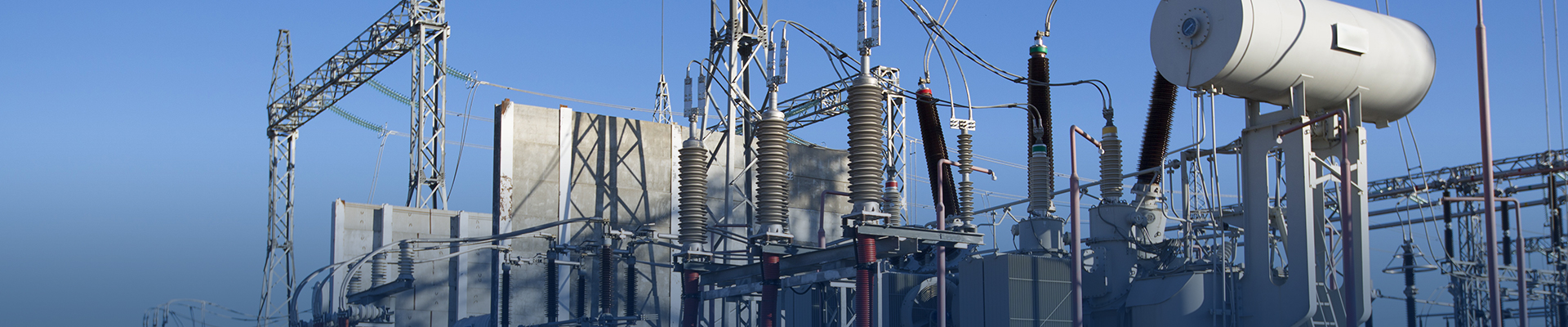
In modern electrical infrastructure, oil immersed transformers are among the most widely deployed power equipment in the world. From utility-scale substations to industrial facilities and renewable energy installations, these liquid-filled units form the backbone of reliable, efficient power distribution. For procurement engineers, project managers, and facility planners, understanding how oil immersed transformers work — and what distinguishes a well-engineered unit from an average one — is essential knowledge when making purchasing decisions that will affect decades of operational performance.
This article provides a comprehensive technical and practical overview of oil immersed transformers: their operating principles, internal structure, cooling mechanisms, application scenarios, key performance parameters, and the factors that matter most when evaluating a supplier. Whether you are specifying equipment for a greenfield project or replacing aging assets, the insights here will help you ask the right questions and make confident decisions.
An oil immersed transformer — also commonly called an oil-filled transformer or liquid-filled transformer — is a type of electrical transformer in which the core and winding assembly (known as the active part) are submerged in a tank filled with insulating dielectric oil. The oil serves two critical functions simultaneously: it acts as an electrical insulator between energized components, and it functions as a cooling medium to carry heat away from the windings and core to the outer surfaces of the tank or radiator system.
This dual role of the oil is what gives oil immersed transformers their fundamental performance advantages over air-cooled alternatives. Higher dielectric strength, superior heat dissipation capacity, and the ability to support larger power ratings in a compact physical envelope make them the preferred solution for medium-voltage and high-voltage distribution and transmission applications worldwide.
Oil immersed transformers are manufactured across an extensive range of capacities — from small distribution units of 30 kVA used in rural electrification networks, up to large power transformers exceeding 100 MVA deployed in transmission substations. Their voltage ratings typically span from 6 kV to 35 kV for distribution-class equipment, and up to 220 kV or higher for power-class units.
At its most fundamental level, an oil immersed transformer operates on the principle of electromagnetic induction, first demonstrated by Michael Faraday in 1831. When alternating current flows through a primary winding wound around a ferromagnetic core, it generates a time-varying magnetic flux in that core. This changing flux then induces an electromotive force (EMF) in a secondary winding, also wound around the same core — transferring electrical energy from one circuit to another without any physical electrical connection between them.
The ratio of the voltages across the primary and secondary windings is directly proportional to the ratio of their respective turns counts. A transformer with 1,000 turns on the primary winding and 100 turns on the secondary will step voltage down by a factor of 10. The current, by the law of conservation of energy, changes in inverse proportion — lower secondary voltage means higher secondary current, and vice versa. This elegant mechanism makes voltage transformers indispensable for efficient long-distance power transmission (at high voltage, low current) and safe end-use distribution (at low voltage, higher current).
Understanding the internal architecture of an oil immersed transformer is important for evaluating quality differences between manufacturers. The major components and their roles are as follows:
1. Magnetic Core
The core provides the low-reluctance magnetic circuit through which flux travels between the primary and secondary windings. High-quality cores are built from cold-rolled grain-oriented (CRGO) silicon steel laminations, precisely cut and stacked using step-lap or full-inclined step-lap joint techniques to minimize air gaps. This construction reduces no-load losses (also called iron losses or core losses), which are a major contributor to lifetime energy cost.
Advanced designs use the tridimensional toroidal (wound) core architecture, where the silicon steel strip is wound rather than stacked. This geometry further reduces no-load losses by up to 50% compared to conventional stacked-core designs, and reduces no-load current by as much as 75% — delivering measurable savings in operating costs over the transformer's service life.
2. Windings
The windings are the current-carrying conductors wound around the core limbs. In oil immersed distribution transformers, low-voltage windings are typically constructed using copper foil in a cylindrical configuration, which provides excellent short-circuit strength and uniform current distribution. High-voltage windings use multi-layer cylindrical structures with paper insulation between layers, carefully balanced to minimize magnetic leakage and optimize mechanical strength under fault conditions.
Copper is the conductor material of choice for premium-grade transformers due to its superior electrical conductivity compared to aluminum, resulting in lower load losses (I²R losses) at rated current. The choice of conductor material significantly affects both efficiency and the long-term reliability under thermal cycling.
3. Insulating Oil
The dielectric oil fills the tank and surrounds the active part. Conventional mineral oil, refined from petroleum, has been the industry standard for over a century and provides excellent electrical insulation properties (dielectric strength typically above 30 kV), low viscosity for good thermal convection, and chemical stability over long service periods. However, increasing environmental awareness has driven adoption of alternative fluids:
• FR3 natural ester fluid (derived from vegetable oils): biodegradable, higher fire point (> 300°C vs. ~160°C for mineral oil), better moisture tolerance, and improved loading capacity due to higher thermal properties.
• Synthetic ester fluids: similar environmental profile to natural esters, often used where regulatory requirements mandate reduced environmental risk.
• High fire-point mineral oil: a cost-effective intermediate option offering improved fire safety over standard mineral oil.
The ability to specify and supply transformers with any of these fluid options is increasingly important for customers in environmentally sensitive locations, areas with strict fire codes, or projects pursuing sustainability certifications.
4. Tank and Radiator System
The tank is the structural enclosure that contains the active part and oil. Tank construction quality directly affects the long-term reliability of the transformer. Tanks should be fabricated from structural steel plate, properly cleaned, phosphated, and coated with corrosion-resistant primer and topcoat systems to ensure outdoor durability. Internal tank surfaces require passivation treatment to prevent contamination of the oil.
Cooling surface area is extended through radiator panels or corrugated fin panels welded to the tank body. The corrugated 'wave' radiator design — used in fully sealed hermetically closed transformers — eliminates the need for a conservator tank by allowing the sealed oil volume to expand and contract thermally without atmospheric contact, thereby protecting oil quality over decades of service.
5. Tap Changer
Most oil immersed transformers include an off-circuit (de-energized) tap changer (OCTC) that allows adjustment of the turns ratio to compensate for primary voltage variations within a defined range, typically ±5% in 2.5% steps. On-load tap changers (OLTCs) are available for applications requiring voltage regulation under load, such as large substation transformers serving variable industrial loads or grid stabilization duties.
6. Bushings and Accessories
High-voltage and low-voltage bushings provide the insulated connections between the internal windings and the external circuit. Oil-level indicators, thermometers, pressure relief devices, buchholz relays (for gas detection in conservator-type units), and drain/sampling valves complete the standard accessory set required for safe operation and routine maintenance.
The International Electrotechnical Commission (IEC) classifies transformer cooling systems using a standardized four-letter code. For oil immersed transformers, the most common cooling classes are:
• ONAN (Oil Natural, Air Natural): Natural convection of oil inside the tank and natural air cooling of the external radiator surfaces. This is the standard cooling mode for distribution transformers up to several MVA. It is fully passive, silent, and maintenance-free.
• ONAF (Oil Natural, Air Forced): Natural convection of oil with forced-air cooling fans mounted on the radiators. Fans typically activate automatically when oil temperature exceeds a set threshold, providing additional cooling capacity without changing the fundamental design.
• OFAF (Oil Forced, Air Forced): Both oil pumps and cooling fans are used, providing maximum cooling efficiency for large power transformers where high continuous ratings are required.
• ONAN/ONAF dual-rated: Many transformers are rated for two cooling stages — for example, 10 MVA ONAN / 12.5 MVA ONAF — allowing the same unit to serve a wider range of load profiles.
For most distribution applications (30 kVA to 2,500 kVA), ONAN cooling with a fully sealed corrugated tank is the optimal solution: it eliminates oil-to-atmosphere contact, prevents moisture ingress and oxidative degradation of the oil, and requires zero maintenance of the cooling system over the transformer's service life.
The combination of high efficiency, high power density, outdoor durability, and competitive lifecycle cost makes oil immersed transformers the preferred choice across a wide range of applications:
Utility Power Distribution Networks
Three-phase oil immersed distribution transformers rated at 10 kV or 35 kV primary voltage are the standard workhorse of municipal and rural power grids worldwide. They step down transmission voltages to the 400 V or 690 V levels used by residential and light commercial loads. High population density areas require units that minimize no-load losses (since they operate continuously at light load for extended periods), making amorphous-core or premium-efficiency silicon steel designs particularly valuable.
Industrial and Mining Facilities
Heavy industrial loads — including motor drives, arc furnaces, compressors, and mining equipment — demand transformers with high short-circuit withstand capability, low impedance for good voltage regulation, and robust mechanical construction to survive vibration-heavy environments. Oil immersed units in the 630 kVA to 2,500 kVA range at 35 kV primary are commonly specified for onsite step-down duty in these sectors.
Renewable Energy Generation
Both wind and solar power plants require step-up transformers to connect generation equipment to the medium-voltage collection grid, and further step-up transformers to interface with the transmission system. These applications place demands on transformers for high efficiency at partial loads (reflecting the variable output profile of renewable sources), tolerance of harmonic distortion from inverter systems, and reliable outdoor operation in geographically remote or harsh environments.
Urban Infrastructure and Substations
Urban distribution substations, underground network systems, and pad-mounted transformer installations for city infrastructure require compact, reliable, and low-noise oil immersed units. Pad-mounted and submersible designs allow installation in confined urban spaces without requiring separate transformer rooms. Noise levels — controlled through core lamination quality, clamping design, and tank construction — are an important specification parameter in residential and commercial environments.
Oil, Gas, and Petrochemical Sites
Transformers serving refineries, offshore platforms, and chemical processing facilities must meet stringent requirements for fire safety, corrosion resistance, and performance in potentially explosive atmospheres. High fire-point ester oil options, stainless steel or epoxy-coated construction, and compliance with hazardous area classification standards are key specification requirements in these sectors.
When specifying or evaluating oil immersed transformers, procurement professionals should focus on the following key performance parameters:
No-Load Loss (P0)
Also called iron loss or core loss, this is the continuous power consumed by the transformer whenever it is energized, regardless of load. It is determined primarily by core material quality and design. Lower no-load loss directly reduces energy consumption and operating cost across the transformer's entire life. Premium-efficiency units (IEC Efficiency Level 2, corresponding to the S20 series) offer significantly lower no-load losses than standard-efficiency designs.
Load Loss (Pk)
Load loss (also called copper loss or short-circuit loss) is the additional power dissipated in the windings when the transformer operates at rated load. It varies with the square of the load current, so it is most significant at high utilization rates. Lower load loss improves efficiency at rated conditions and reduces operating temperature.
No-Load Current (I0)
Expressed as a percentage of rated current, the no-load current reflects the magnetizing current required to maintain core flux. High no-load current increases reactive power demand and grid losses. Advanced toroidal-core and amorphous-core designs achieve no-load current values below 0.5% of rated, compared to 2–3% for conventional designs.
Short-Circuit Impedance (Uk%)
Short-circuit impedance determines the transformer's fault current contribution and voltage regulation characteristics. Typical values for distribution transformers range from 4% to 6%. Lower impedance provides better voltage regulation but higher fault currents; higher impedance limits fault currents but increases voltage drop under load.
Temperature Rise and Insulation Class
Oil immersed transformers are thermally classified by their maximum winding temperature rise above ambient. Standard ratings include 55°C and 65°C rise, with insulation systems designed to support continuous rated operation at these temperatures for a design life of 20–30 years. The oil temperature must remain within safe limits to prevent accelerated insulation aging.
Efficiency Levels
International efficiency standards classify distribution transformers into efficiency levels (e.g., IEC Tier 1, Tier 2, equivalent to S13 and S20 series designations in the Chinese market). Higher efficiency levels correspond to lower total ownership costs and are increasingly mandated by utility procurement requirements and green building standards.
Oil immersed transformers are manufactured in two fundamentally different tank configurations, each with distinct maintenance and reliability implications:
Conservator-Type (Open Breathing) Design
The traditional design includes an oil conservator — a small auxiliary tank mounted above the main tank — connected to the main oil volume through a buchholz relay. As the oil expands and contracts with temperature, air is exchanged through a silica gel breather that absorbs moisture. While this design allows simple oil-level monitoring, the oil is in indirect contact with atmospheric moisture, leading to gradual moisture ingress and oil oxidation over time, which degrades insulation performance.
Fully Sealed Hermetic Design
In the fully sealed design, corrugated fin radiators (also called 'bellows' or 'wave' panels) welded directly to the tank body accommodate thermal expansion of the oil volume without any atmospheric contact. The sealed internal atmosphere eliminates moisture ingress, prevents oil oxidation, and maintains oil quality at its initial specification for the entire service life — typically 20–30 years without oil treatment or replacement. This design is now the international standard for distribution transformers and strongly preferred for applications where maintenance access is difficult or maintenance costs must be minimized.
For international procurement, standards compliance is a non-negotiable requirement that affects equipment safety, grid interconnection approval, and long-term insurer acceptance. Key standards governing oil immersed power transformers include:
• IEC 60076 series: The primary international standard covering all aspects of power transformer design, testing, and performance — including loss measurement (IEC 60076-1), temperature rise (IEC 60076-2), insulation levels (IEC 60076-3), and no-load losses (IEC 60076-11 for distribution transformers).
• IEC 60296: Standard governing the specification of mineral insulating oil for transformers.
• GB/T 6451 and GB/T 10228: The Chinese national standards governing oil immersed and dry-type distribution transformer performance, applicable for equipment manufactured in China.
• CE Marking (EN 50588-1): Required for distribution transformers sold in the European Economic Area, covering minimum energy efficiency requirements.
• ISO 9001: Quality management system certification confirming that design, manufacturing, and inspection processes meet internationally recognized quality standards.
Transformers should be subject to routine tests (as a minimum) at the factory prior to shipment, including: ratio verification, polarity and vector group check, no-load loss and current measurement, load loss and impedance measurement, dielectric tests (applied voltage, induced voltage, and impulse where specified), and oil quality testing. Type tests, including temperature rise tests and short-circuit withstand tests, should be documented for the design series.
One of the most significant advantages of a well-designed oil immersed transformer over alternative technologies is its exceptional service life with minimal maintenance requirements. Fully sealed units require virtually no scheduled maintenance for the first 10–15 years of operation under normal conditions. Periodic inspection activities typically include:
• External visual inspection of tank integrity, oil leakage, and accessory condition.
• Infrared thermographic inspection of connections and bushing terminations.
• Oil sampling and dissolved gas analysis (DGA) at intervals of 3–5 years for early detection of internal faults or insulation degradation.
• Verification of protection relay settings and operation of temperature monitoring devices.
Properly maintained oil immersed transformers regularly achieve service lives of 30–40 years or longer, making them a highly cost-effective long-term asset when the initial capital investment is evaluated on a lifecycle cost basis. Total cost of ownership — encompassing purchase price, installation, energy losses, and maintenance — consistently favors high-efficiency, fully sealed designs over the long term.
For procurement professionals sourcing oil immersed transformers internationally, supplier evaluation should go beyond price per unit. The following criteria differentiate capable, reliable manufacturers from commodity suppliers:
Vertical Integration and Raw Material Control
Manufacturers who produce their own silicon steel cores and wind their own electromagnetic coils maintain tighter control over material quality, dimensional accuracy, and production scheduling. Self-produced cores and windings eliminate supply chain variability that can affect both product quality and delivery timelines — a critical advantage for time-sensitive projects.
Certified Testing Capability
A credible manufacturer operates an in-house testing laboratory equipped to perform the full range of IEC routine tests and type tests, with calibrated instrumentation traceable to national standards. Factory acceptance testing (FAT) capability — allowing customer engineers or third-party inspection bodies to witness testing prior to shipment — is an important quality assurance mechanism for high-value orders.
Manufacturing Scale and Production Infrastructure
Adequate factory floor space, specialized winding equipment, vacuum oil-filling systems, and experienced production personnel are prerequisites for consistent quality at scale. Manufacturers with dedicated production facilities of 5,000 m² or more, established since at least the 2000s, typically have the process maturity to deliver consistent product quality across large orders.
Customization Capability
Most real-world projects require some degree of customization — whether adjusting voltage ratios, tap changer ranges, bushing types, accessories, enclosure paint systems, or nameplate language. A manufacturer with flexible engineering design capability and experience serving international markets can efficiently accommodate these requirements without excessive lead-time penalties.
Export Experience and Documentation
International shipments require proper export documentation, packing for ocean freight, and familiarity with destination country import requirements. Experienced export manufacturers understand how to package transformers to prevent transport damage, provide complete test reports and material certificates, and support customs clearance with accurate tariff classifications and country-of-origin documentation.
Both oil immersed and dry-type transformers can serve distribution voltage applications, and the selection decision depends on installation environment, regulatory requirements, and lifecycle economics. The following comparison highlights the key decision factors:
• Power capacity: Oil immersed transformers are available in a much wider capacity range — from 30 kVA to well above 100 MVA — whereas dry-type units are generally most practical below 5 MVA and rarely exceed 20 MVA in standard configurations.
• Outdoor and substation duty: Oil immersed units are the standard for outdoor pad-mounted, pole-mounted, and substation installations due to their superior weatherproofing, higher capacity, and lower cost per kVA.
• Indoor installation sensitivity: Where fire codes strictly prohibit oil-filled equipment in occupied buildings — particularly below-grade installations in residential or public facilities — dry-type transformers may be mandatory regardless of other considerations.
• Efficiency at distribution scale: At equivalent ratings, modern high-efficiency oil immersed designs (S20 series, IEC Tier 2) achieve lower total losses than equivalent dry-type units, particularly for no-load losses that accumulate over 24/7 energized operation.
• Total ownership cost: For ratings above 630 kVA, oil immersed transformers generally offer a lower total cost of ownership when factoring in purchase price, installation, energy losses, and maintenance over a 20-year analysis period.
A transformer is a 20- to 30-year asset. The nameplate specifications tell you what a unit is designed to do; what happens inside the factory determines whether it actually achieves those specifications consistently, throughout thousands of production hours, across varying material batches and production shifts. The difference between a transformer that performs to specification for 30 years and one that fails prematurely due to inadequate core clamping, substandard insulation paper, or improperly processed oil is invisible at the time of purchase — and enormously consequential in operation.
This is why procurement teams at experienced utilities and industrial companies invest time in supplier qualification: factory audits, review of test reports, reference checks on existing installations, and technical dialogue with engineering teams. The best price is rarely the best value when the total cost of downtime, replacement, and energy losses is factored over the asset's life.
For buyers sourcing oil immersed transformers from international markets, partnering with a manufacturer who combines engineering depth, manufacturing transparency, established quality systems, and responsive customer support is the foundation of a successful procurement outcome.
Power Your Projects with Confidence — Choose Tianya Electric
Tianya Electric has been designing and manufacturing oil immersed transformers since 2007, operating from a purpose-built 6,000 m² production facility with full vertical integration — including self-produced silicon steel cores and electromagnetic coils. Our product range covers 10 kV and 35 kV series three-phase oil immersed distribution transformers from 30 kVA to 2,500 kVA, with efficiency levels from standard S13 (IEC Tier 3) through premium S20 (IEC Tier 2) and super-premium S22 (IEC Tier 1) designs. All products are manufactured to IEC 60076 standards and carry ISO and CE certifications, supported by multi-stage quality control from incoming material inspection through pre-shipment testing.
Whether your project requires standard distribution transformers, high-efficiency eco-friendly designs with FR3 ester oil, or fully customized OEM/ODM solutions tailored to your specific voltage, capacity, and accessory requirements, Tianya Electric delivers engineering expertise, manufacturing reliability, and global shipping capability — with low minimum order quantities that make professional-grade transformers accessible for projects of any scale.

Electrical Transformer Procurement Checklist: Sizing, Standards, Testing and Delivery
Electrical transformer procurement involves more than requesting several prices for the same kVA rating. A technically incomplete inquiry can produce offers that look comparable but include different insulation levels, losses, etc.
Jul. 30, 2026

How to Choose the Right Electrical Transformer for Your Project
Selecting an electrical transformer is not simply a matter of matching an incoming voltage to an outgoing voltage. The transformer must also support the real load profile, withstand expected fault conditions, operate within the site environment.
Jul. 30, 2026