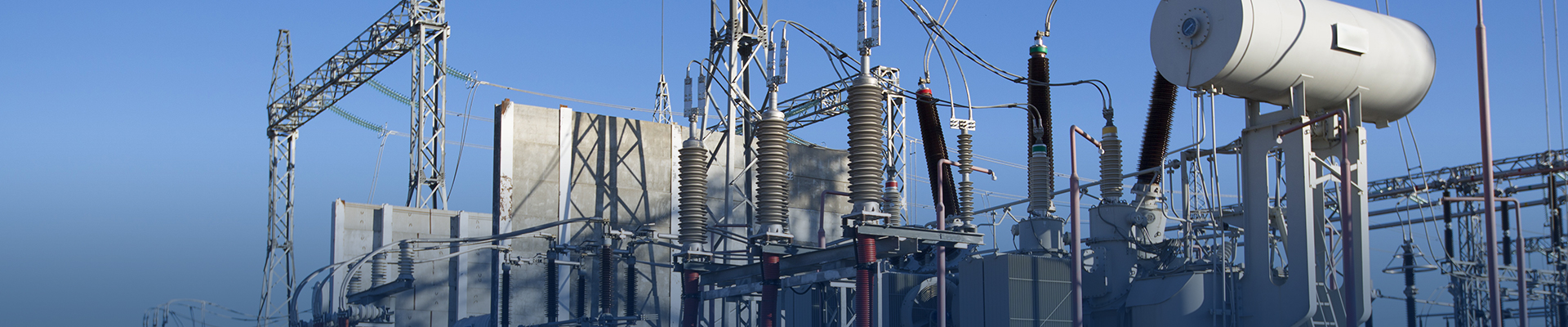
Selecting an electrical transformer is not simply a matter of matching an incoming voltage to an outgoing voltage. The transformer must also support the real load profile, withstand expected fault conditions, operate within the site environment, meet efficiency requirements and integrate with switchgear, protection devices and cables.
A unit selected only by its purchase price can create higher energy costs, excessive temperature rise, nuisance protection trips, difficult maintenance or premature insulation aging. On the other hand, unnecessary oversizing increases capital cost and may leave the transformer operating inefficiently at a very low load.
This guide provides a practical selection framework for utilities, EPC contractors, industrial buyers, commercial developers and renewable energy projects looking for a reliable electrical transformer.
The first step is to define what the transformer must do within the power system. A complete requirement should include the source voltage, required output voltage, connected load, operating profile, fault level, installation location and applicable standard.
Do not begin by asking only for a “500 kVA transformer” or “10 kV transformer.” The same nominal rating can represent very different designs depending on phase, frequency, vector group, impedance, taps, conductor material, cooling class and environmental conditions.
A step-up transformer increases voltage, commonly for transferring generated power into a collection or transmission network. A step-down transformer reduces voltage for distribution to industrial equipment, buildings and local networks. Some projects also require isolation, a specific neutral arrangement or special impedance to coordinate fault current.
Clarify whether the transformer will supply general distribution loads, motors, variable-frequency drives, rectifiers, data equipment, renewable-energy inverters or another transformer. Different loads may require different thermal margins and winding designs.
Transformer capacity is normally stated in kVA rather than kW because the transformer must carry both real and reactive components of current. For a three-phase load, apparent power can be estimated as:
kVA = √3 × Line Voltage × Line Current ÷ 1,000
If load power is known in kW:
kVA = kW ÷ Power Factor
A 720 kW load operating at a power factor of 0.90 requires at least 800 kVA before demand, starting current, harmonics and expansion are considered.
Connected load is not always the same as maximum operating demand. Some equipment may run intermittently, while other processes operate continuously. A load schedule should identify continuous loads, intermittent loads, standby equipment and future additions.
Applying excessive diversity can leave the transformer undersized. Ignoring diversity can produce an unnecessarily large unit. The most reliable approach is to use measured demand data for an existing facility or an engineering load study for a new project.
Large motors can draw several times their normal current during starting. This may cause unacceptable voltage drop even when the transformer has adequate continuous capacity. Crushers, compressors, pumps, welding equipment and other cyclic loads can also create rapid thermal and voltage changes.
The manufacturer should receive motor rating, starting method, starting frequency and acceptable voltage drop. These details help determine the required capacity and impedance.
A reasonable expansion margin can prevent early transformer replacement. However, a transformer that remains lightly loaded for many years continues to consume no-load energy. Buyers should compare the cost of initial oversizing with modular expansion, parallel transformers or a planned future unit.
Provide nominal incoming and outgoing voltages, but also define the system’s highest operating voltage and insulation requirements. A nominal 10 kV network, for example, may require equipment designed for a higher standardized insulation class.
The voltage specification should be coordinated with switchgear, cable insulation and surge protection. For export projects, avoid assuming that voltage practices in one country apply automatically to another.
Specify whether the system operates at 50 Hz or 60 Hz and whether the transformer is single-phase or three-phase. A transformer should not be used at a frequency lower than its design frequency without engineering review because core flux and excitation current can increase.
Three-phase transformers are widely used for industrial and utility distribution because they efficiently supply large balanced loads. Single-phase units remain common in smaller distribution networks and specialized applications.
The vector group describes winding connections and phase displacement. Common configurations include Dyn11 and Yyn0, but the correct choice depends on grounding, harmonic behavior, parallel operation and compatibility with the existing system.
If transformers will operate in parallel, their voltage ratios, vector groups, phase sequence, tap positions and impedance characteristics must be compatible. Parallel operation should be stated during the inquiry rather than decided after delivery.
Tap settings compensate for predictable variation in the supply voltage. Specify the tap range and increments, such as a percentage above and below nominal voltage. Also indicate whether adjustment can occur only when de-energized or must take place under load.
For many distribution applications, an off-circuit tap changer is appropriate. Networks requiring continuous automatic voltage regulation may require an on-load tap changer and associated controls.
Oil-immersed electrical transformers use insulating liquid for dielectric insulation and heat transfer. Natural liquid circulation can provide effective cooling without relying on powered fans or pumps for many distribution ratings.
They are commonly selected for outdoor substations, utility networks, industrial plants, renewable-energy collection systems, mining projects and locations requiring robust continuous operation. Sealed designs can reduce moisture entry and routine liquid-handling requirements.
Buyers should assess fire separation, spill containment, insulating-fluid type, maintenance access and environmental regulations. Mineral oil and alternative fluids have different fire, environmental, viscosity and cost characteristics.
Dry-type electrical transformers use air and solid insulation rather than an insulating liquid. Cast-resin windings offer strong mechanical protection and good resistance to humidity, dust and contamination when correctly specified.
Dry-type units are frequently selected for commercial buildings, hospitals, transport infrastructure, factories, data facilities and other indoor or populated locations where fire strategy and liquid containment are important.
They require adequate airflow. A poorly ventilated transformer room can reduce available capacity or cause excessive temperature rise. Buyers should confirm enclosure protection, ventilation, temperature sensors, fan controls and required installation clearances.
Transformer capacity and insulation life depend on ambient temperature. If the project experiences sustained temperatures above standard design conditions, the transformer may require additional thermal margin, lower temperature rise or enhanced cooling.
At higher altitude, reduced air density lowers cooling performance and dielectric strength. Dry-type units and air-insulated external connections are particularly sensitive to this effect. Provide the site elevation so that required derating or design adjustments can be evaluated.
Coastal locations, chemical plants, mines and dusty industrial sites may require improved enclosure protection, corrosion-resistant coatings, sealed components or increased creepage distances. “Outdoor use” alone does not describe the severity of an environment.
Indoor projects should define fire classification, room ventilation, access, clearances and acceptable noise. Transformer sound can be transmitted through walls and floors, so building projects may require vibration isolation or acoustic treatment in addition to a low-noise transformer design.
Projects in seismic regions may require special bracing, anchoring and qualification. Transport routes, lifting restrictions and installation openings should also be checked before the final tank or enclosure dimensions are approved.
The lowest purchase price does not necessarily produce the lowest project cost. Transformers operate for many years, and losses accumulate whenever the unit is energized or loaded.
No-load or core loss remains present whenever the transformer is energized. It is particularly important for units that operate continuously at a low or moderate load. Core material, flux density, joint construction and manufacturing accuracy all affect this value.
Load loss increases with current and becomes especially important in heavily loaded industrial networks. Conductor material, conductor cross-section, winding geometry, stray flux and operating temperature influence load loss.
Request guaranteed no-load loss, load loss, excitation current and impedance in the technical offer. General statements such as “high efficiency” are not enough for a meaningful lifecycle calculation.
A simple evaluation can multiply expected annual losses by operating hours, electricity cost and anticipated service years. For critical comparisons, include the expected loading profile rather than calculating only at full load.
Percentage impedance influences both voltage regulation and available fault current. A transformer with very low impedance may allow high short-circuit current that exceeds the interrupting rating of downstream equipment. Excessively high impedance may cause unacceptable voltage drop during heavy loading or motor starting.
The specified impedance should be coordinated with the system protection and load-flow studies. Mechanical short-circuit strength is also essential because fault currents create powerful forces within the windings. Accurate winding geometry, solid support and controlled clamping help the active part withstand these stresses.
For a deeper explanation of how internal construction affects these characteristics, review electrical transformer components and performance.
The purchase specification should identify the applicable standard instead of requesting a transformer that “meets international standards” without further detail. IEC 60076 is widely used for power transformers, while some markets and utilities use IEEE, ANSI or national requirements.
Standards can affect insulation levels, tolerances, temperature rise, test methods, terminals, markings and efficiency. Local grid or utility specifications may add requirements beyond the general standard.
Routine testing should verify key properties of every completed transformer. Depending on the product and standard, this commonly includes:
Winding resistance measurement
Voltage ratio and phase-displacement verification
Impedance voltage and load-loss measurement
No-load loss and excitation-current measurement
Insulation resistance measurement
Applied-voltage withstand test
Induced-voltage withstand test
Functional checks of accessories and protection circuits
Leak testing for liquid-filled designs
Type or special tests may include temperature-rise, lightning impulse, sound-level, partial-discharge or short-circuit-related verification. The contract should state which tests are included and whether the buyer will witness a factory acceptance test.
A useful transformer quotation should include more than a model name and price. Look for a technical data sheet containing:
Transformer type, rated capacity and quantity
Primary and secondary voltage ratings
Frequency, phase and vector group
Tap range and operating method
Guaranteed no-load and load losses
Impedance and temperature rise
Cooling class and insulation class
Conductor and core materials
Insulating-liquid type where applicable
Dimensions, mass and liquid volume
Enclosure or tank protection details
Included accessories and monitoring devices
Applicable standards and test scope
Drawing, manual and test-report deliverables
Production time, packing and warranty terms
The electrical transformer product portfolio supports oil-immersed and dry-type configurations, common 10 kV and 35 kV distribution requirements and project-specific electrical or mechanical customization. Engineering review should be completed before production so that the supplied unit matches both the network and the installation site.
Prioritize standardized voltage ratings, efficiency, overload behavior, low maintenance and compatibility with utility protection practices. Outdoor oil-immersed transformers are commonly used, although project standards determine the final design.
Review motor starting, cyclic loads, harmonics, fault level, redundancy and downtime cost. Large process loads may justify parallel units or N+1 capacity rather than one transformer serving the entire facility.
Fire strategy, noise, access and indoor ventilation frequently drive the decision. Dry-type transformers are often suitable, but transformer-room heat removal must be included in the building design.
Consider inverter harmonics, cyclic loading, repeated thermal changes, collection voltage, grid-code requirements and environmental exposure. The transformer must also coordinate with protection, grounding and reactive-power strategies.
Dust, corrosion, high temperature, vibration, remote maintenance and transport limitations can be as important as electrical ratings. Specify the environment in measurable terms and identify critical spare parts or accessories.
There is no universal percentage. The margin should reflect load uncertainty, motor starting, ambient conditions and planned expansion. Excessive oversizing can increase capital cost and no-load energy consumption.
Oil-immersed transformers are often preferred for outdoor, high-capacity and utility applications. Dry-type transformers are frequently selected indoors where fire safety and liquid containment are priorities. The decision should include environment, maintenance and lifecycle cost.
It may be possible under approved voltage and flux conditions, but it requires an engineering review. Operating a transformer at a frequency lower than its design basis is more likely to create over-fluxing risk.
Motor starting, harmonics, cyclic duty and continuous loading affect temperature, voltage regulation and winding forces. Capacity alone does not fully describe the required performance.
Provide the one-line diagram, load schedule, voltages, capacity, frequency, phase, vector group, impedance, taps, site conditions, standard, accessories and testing requirements. The transformer procurement checklist provides a complete RFQ structure.
The right electrical transformer is the one that meets the complete system requirement—not merely the requested capacity. Buyers should evaluate load behavior, voltage interface, impedance, insulation, cooling, environment, losses, testing and future operating plans before approving a design.
For customized electrical transformer selection, engineering coordination, reliable manufacturing and responsive project support, choose Tianya Electric.

Electrical Transformer Procurement Checklist: Sizing, Standards, Testing and Delivery
Electrical transformer procurement involves more than requesting several prices for the same kVA rating. A technically incomplete inquiry can produce offers that look comparable but include different insulation levels, losses, etc.
Jul. 30, 2026

How to Choose the Right Electrical Transformer for Your Project
Selecting an electrical transformer is not simply a matter of matching an incoming voltage to an outgoing voltage. The transformer must also support the real load profile, withstand expected fault conditions, operate within the site environment.
Jul. 30, 2026