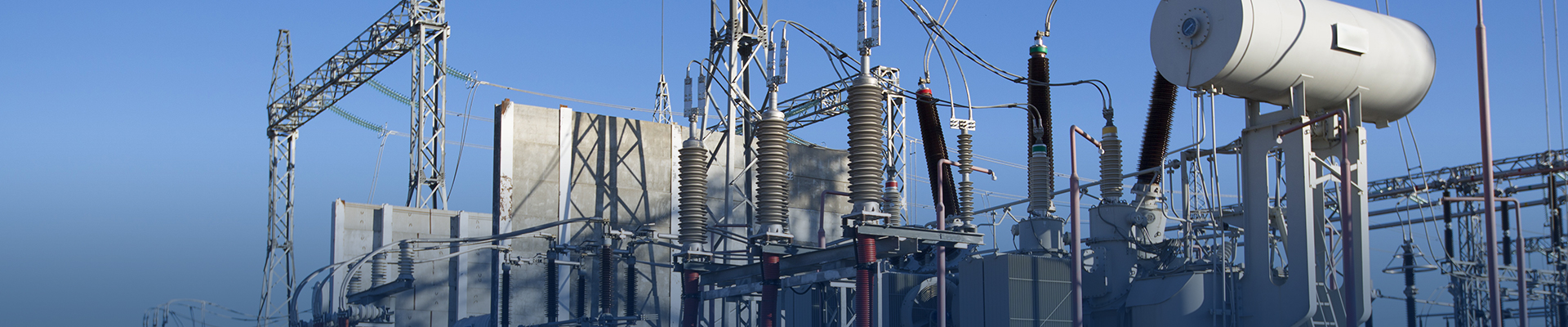
Voltage Transformers, also referred to as Potential Transformers (PTs), are electrical devices designed to step down high voltage levels to a safer, measurable range for monitoring and metering purposes. They are connected in parallel with the power system and impose only a minimal load on the supply network.
These transformers are engineered to maintain high accuracy in voltage ratio and phase relationship, ensuring precise secondary output for reliable metering and protection systems.
Voltage transformers are widely applied in power generation plants, industrial facilities, and utility distribution networks. In substations, they are typically installed alongside switchgear on both the high-voltage and low-voltage sides of large power transformers to support system monitoring and control.
Depending on the application and voltage level, voltage transformers are generally classified into three main types:

High Voltage Transformers are designed for transmission systems operating at High, Extra-High, and Ultra-High voltage levels, typically used for long-distance power delivery from generating stations. The main purpose of transmitting electricity at high voltage is to improve efficiency by reducing current, which in turn minimizes energy losses in transmission lines.
Due to the high operating voltages, these transformers require strict safety measures and are often equipped with remote control systems or installed in controlled substations for manual operation and maintenance. Their design may include high-voltage windings, enhanced insulation systems between windings, or a combination of both to ensure safe and stable performance under extreme electrical stress.
Medium Voltage Transformers are commonly used in large industrial facilities and commercial applications that demand a significant and stable power supply. These transformers operate at intermediate voltage levels, balancing efficiency and safety for localized distribution networks.
In electrical systems, voltage is inversely related to current—when voltage increases, current decreases, and vice versa. This relationship helps reduce transmission losses and improves overall system efficiency. Medium voltage transformers are therefore essential for industries that require higher power capacity than low-voltage systems can provide, while still maintaining manageable installation and operational requirements.
Low Voltage Transformers are designed for safe and efficient power distribution at lower voltage levels, typically used in residential systems, commercial equipment, and light industrial applications. In many configurations, they are paired with rectifier circuits to convert alternating current (AC) into direct current (DC) when required by downstream devices. In practical operation, electrical energy is transferred between primary and secondary windings through electromagnetic induction, ensuring stable and controlled voltage output.
According to the American National Standards Institute (ANSI), voltage transformer classifications are generally defined as:
· High Voltage: approximately 115,000V to 1,100,000V
· Medium Voltage: approximately 2,400V to 69,000V
· Low Voltage: approximately 240V to 600V
Low voltage transformers play a critical role in supporting end-use electrical equipment by delivering safe voltage levels while maintaining system efficiency and reliability. They are widely used across automation systems, control panels, and various electrical devices requiring consistent low-voltage power.
Many industries rely on voltage transformers to operate machinery safely and efficiently. Tianya Electric provides a wide range of technology-driven voltage transformers and MV switchgear solutions designed to enhance circuit protection and reduce electrical risks. With a strong focus on quality and reliability, Tianya Electric delivers solutions aimed at improving power management performance and ensuring stable operation across diverse industrial applications.

Electrical Transformer Procurement Checklist: Sizing, Standards, Testing and Delivery
Electrical transformer procurement involves more than requesting several prices for the same kVA rating. A technically incomplete inquiry can produce offers that look comparable but include different insulation levels, losses, etc.
Jul. 30, 2026

How to Choose the Right Electrical Transformer for Your Project
Selecting an electrical transformer is not simply a matter of matching an incoming voltage to an outgoing voltage. The transformer must also support the real load profile, withstand expected fault conditions, operate within the site environment.
Jul. 30, 2026